EducationAIRDNAHisotorical datahistorydatadata toolSTRinvestment
🚨 Historical STR Data Is Lying to You (And It's Time Someone Said It)

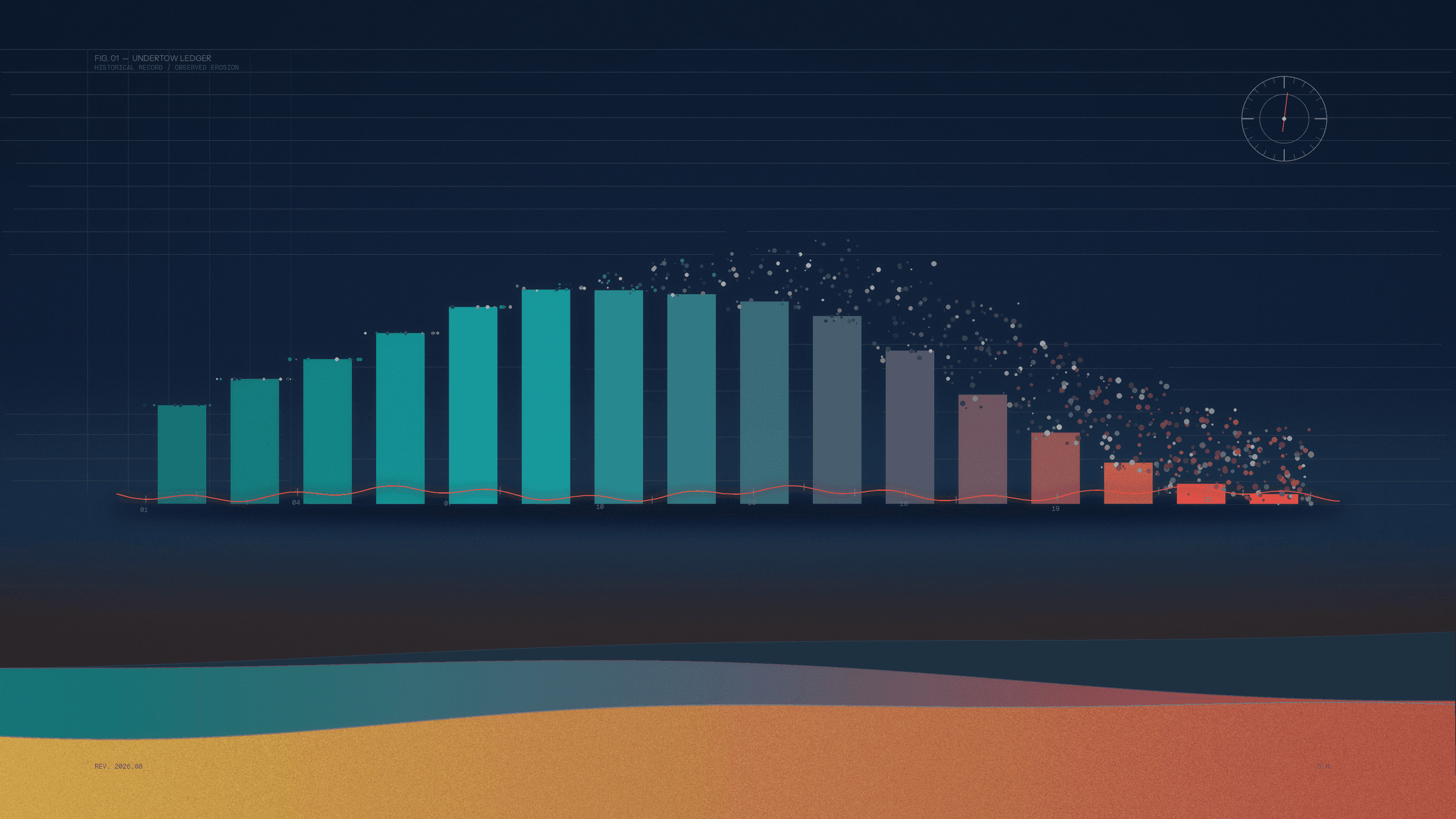
Somebody is buying a short-term rental this week because a screenshot told them "this property makes great money." That screenshot is history. Not a forecast. Not a promise. Not even a decent guess. And it's time somebody in this industry said it plainly: 🗣️
Historical short-term rental data, the way almost everyone uses it, is garbage.
We say that as people whose entire business runs on data — MLS records, comps, revenue reports, all of it. We're not anti-data. We're anti-lazy data. And "here's what it made last year" is the laziest, most dangerous number in this industry.
🎭 The Trailing-12 Con
Almost every STR pitch you've ever seen is built on trailing twelve months of performance. It sounds rigorous. It sounds like due diligence. What it actually is: a snapshot of a market that has already moved on by the time you close.
New listings flood in. Algorithms get rewritten overnight. Rules change without warning. When New York's Local Law 18 took effect, the city's active short-term rental listings didn't dip — they collapsed by roughly 85% almost overnight. Every "historical average" for a Manhattan Airbnb became fiction the day the law took effect. That's not a slow decline history could have warned you about. That's the floor disappearing.
"Past performance is not indicative of future results" is printed on every mutual fund disclosure in America. Nobody prints it on a short-term rental pitch deck. Maybe they should. 💀
🎯 Even the Tool Everyone Trusts Admits It's Guessing
AirDNA's Rentalizer is the single most-cited data source in this industry — and its own accuracy disclosure says individual property estimates can be off by 15 to 30 percent, in either direction. The bias doesn't even run neutral. It skews optimistic, consistently enough that analysts tell new investors to plan for only 60-75% of the number the tool actually gives them.
Read that again. The industry-standard data source is telling you, in writing, not to fully trust the industry-standard data source. And yet it still gets treated like gospel in listing presentations everywhere — including, if we're honest, right here on the Gulf Coast.
✨ "Averages" Are a Magic Trick
A market can look strong on paper — rising revenue, glowing headlines — while individual owners inside that same market are quietly bleeding out. Averages flatten the winners and the losers into one comfortable number. That comfortable number is what gets quoted to you. The distribution underneath it — the part that actually determines whether your property wins or loses — almost never makes the pitch.
🌅 But Here's the Turn: History Isn't Worthless. It's a Starting Line.
Okay — rant over for a second, because this matters just as much as the takedown. None of this means historical data should get thrown in the trash. It means it's been handed to you as an answer when it was only ever meant to be a question.
Historical performance tells you where a market has been. That's real, useful information — it's just not the finish line everyone treats it as. The investors who are actually winning in this environment right now aren't the ones who found the best trailing-12 comp. They're the ones who looked at that number, asked "okay, what's changing next," and built their strategy for where the market is headed — not where it used to be.
A property with soft historical numbers isn't automatically a bad buy. Sometimes it's an underpriced opportunity sitting right next to a repositioning, a design refresh, or a pricing strategy nobody's tried yet. A "saturated" market on paper is often just a market full of mediocre, coasting listings — which is exactly the kind of market where a sharp, well-run property pulls away from the pack. History shows you the baseline. What you build on top of it is still entirely up to you. 🛠️
🧭 So What Do You Actually Do With Historical Data?
Treat it as a baseline, not a forecast. It tells you where things stood — not where they're going. Ask what's changing next — new supply, new rules, new competition — before you ask what happened last year. Underwrite conservatively. If the tool itself admits a 15-30% margin, plan for the low end and let reality surprise you upward. Work with someone who watches the market weekly, not annually. A live read beats a static export every time. Use the past to plan the next move — not to justify the one you already want to make.
Historical data isn't the villain here. Blind trust in it is. Used right, it's the launching pad. Used wrong, it's just expensive nostalgia. 🚀
Share this article

Written by Justin Powell
Justin Powell, Realtor®, is a Gulf Coast real estate agent with eXp Realty and Savvy STR Agents, specializing in short-term rental (STR) investments along the Alabama Gulf Coast, including Gulf Shores, Orange Beach, and Fort Morgan. Roll Tide y'all! An active STR owner and investor, Justin is also the founder of Seabrook VM, a short-term rental operations company focused on revenue optimization, listing performance, and operational systems. By combining hands-on ownership experience with local market expertise, STR analytics, and compliance knowledge, Justin helps buyers and sellers evaluate opportunities based on real revenue potential, risk, and long-term scalability.
View Profile